HBTX - A crazy idea, a real problem, a team of near-strangers building a business prototype from scratch.
20 August 2026
A few months ago, none of this existed. Just a banana nobody wanted and a hunch that it could become something more. Yet, at the beginning of August, we submitted a real application to a national startup programme for Australian-grown innovation. And we have a project serious enough to have real industry conversations.
The problem, and a coalition of the willing
The problem that shouldn’t exist - but does: Australian growers lose about a third of their banana crop before it reaches sale, and almost none of it is recovered into anything. Most of what’s thrown out on-farm is turned away for how it looks, not for anything wrong with the fruit. A third of a crop, edible, binned for being the wrong shape. That’s the hypothesis HBTX is built on: a banana rejected for its looks isn’t waste; it’s a raw material that’s been misjudged. And the flagship test of it is our Blue Banana — a radically enhanced banana built for the fridge next to the energy drinks - yes, really.
For the first time, we put real weight on that idea at the Monash Startup Sprint — a bootcamp weekend that offered the opportunity to throw together some of my students from Monash, Swinburne and the University of Melbourne into a live venture-building programme. A mixed team of near-strangers and forty-eight hours. It was real fun. And we made real progress.
Sienna Drever joined for a day and did the demand-side groundwork — talking to the public, reading how the product has to be presented to reach anyone. Chantelle Blyth dropped her research lab pipettes for the weekend and went back into full commercial mode, pitching so hard that the peel flew off the Banana - the only way this Banana deserves to be pitched. The only slip was missing the market day, which would have been the first real test of putting a Blue Banana prototype in front of an unsuspecting public. But we came out of the bootcamp with sharper ideas and real evidence that someone might pay real money for it.
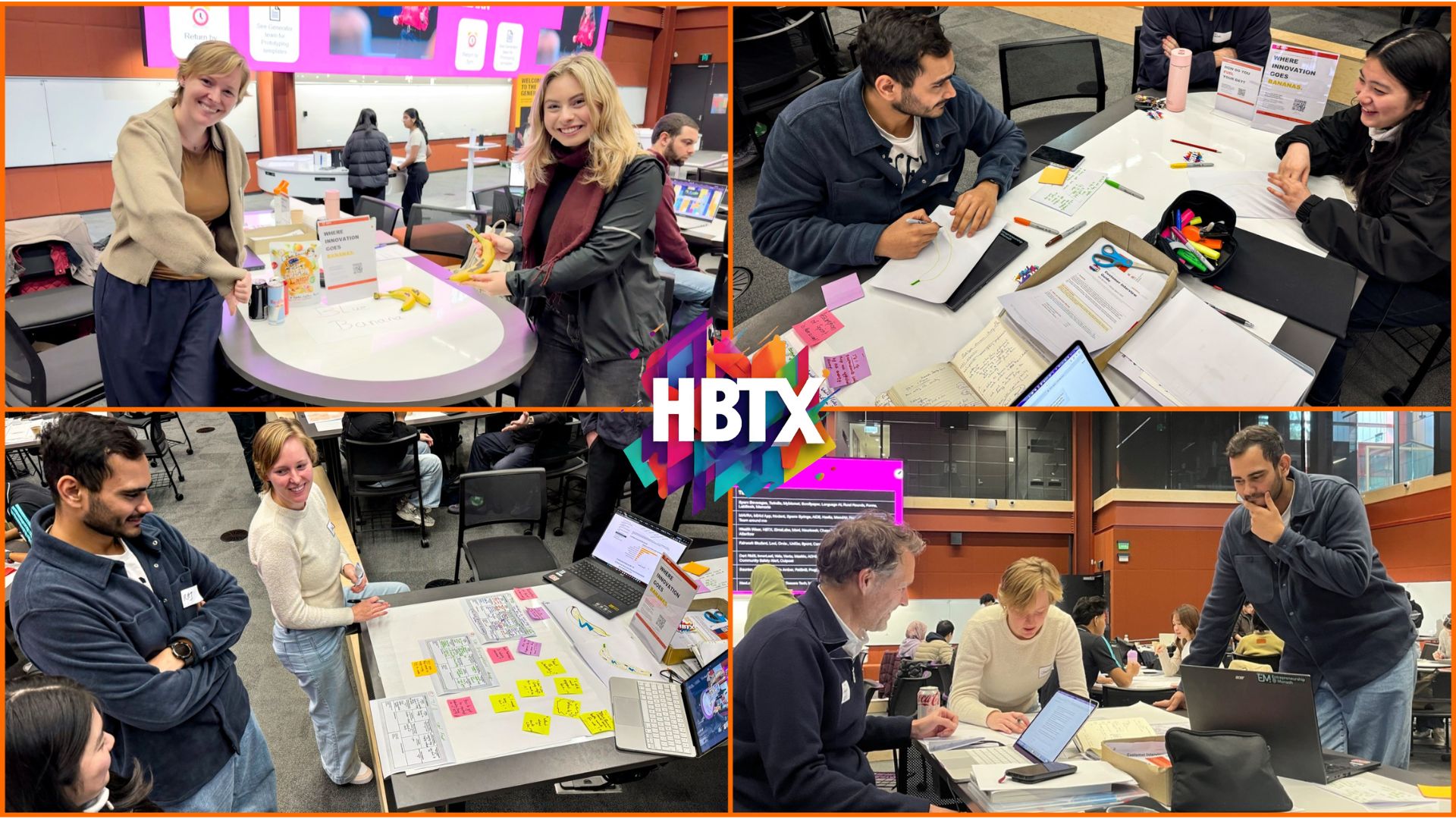
No market day, no problem. We just had to build it ourselves - and we made it better (for us).
The first Banana sprint, and the market day Banana Innovation Day we ran ourselves
Following the bootcamp, the University of Melbourne-based Banana team ran their first sprint on their own, and it ended the way the Monash one should have: with a real audience, real strangers, and real data. Market day with Banana Power: the BioScience Banana Innovation Day at UoM.
Chandana Chandran and Binyu Shen created the prototypes — she and Binyu did the early product work, which meant the group had something real and tasty to bring — it was ready for Monash, but Melbourne got the taste of it. Tim (Tingsong) Lu built the first brand sound prototypes, and Joe Clark began to attack the hardest technical questions underneath the yellow peel.
And then there’s the one who was there first, and is still here.
Raj, the first Banana Hero
Raj Hapani isn’t a student anymore — he’s graduated. But he was one of the first people to ever hear about and work on the Blue Banana, as a Monash TeaMWork student back in 2025, which makes him the second-longest Banana-believer (after me, David and Herby). He was there when it was just an idea, and he’s here now with a submission that includes a business prototype. When the semester break ended, Raj kept going — beginning to reach out to banana growers across the country to find out whether the fruit we need is fruit we can actually get. That question, whether the waste is reachable and really real (and not just a figure in a report), is the one we hope to finally answer in the next stage.
The Banana Seed is getting planted (into Hort Innovation?)
All of that — the idea, the bootcamp weekend, the sprint, the Banana Innovation day, the grower calls — formed the basis of our Hort Innovation Frontiers application, which went in at the beginning of August. Not an idea anymore. A business prototype built on the combined work this multi-year pan-University HBTX team did, now in front of industry experts.
I still find it amazing how it was made: a “crazy” idea born on a hiking trail on an Austrian mountain, that found a real business and sustainability problem at an Australian AgTech conference, a guess that those two could go well together and a group of people who barely knew each other when they started, but who were adventurous enough to take on a challenge. All of it made in the Banana Innovation Capital of Australia - in true Blue Banana fashion - the one at the wrong end of the country. That it produced something that now a national innovation programme will read is not random; it has been achieved by design. And it’s the best argument I have for keeping on doing what I do.
This particular HBTX journey also changed how I approached the second half of the year — I rebuilt my University of Melbourne programme completely - for all three teams. Bringing in real deliverables instead of assignments. This once again demonstrates what can happen when you hand students a real problem rather than a marked one, and give them real responsibility.
Whether the application succeeds, who knows. But it exists; it’s real. Concept, not compost - Stage 3.
And one day, I am sure, all of this will become its own new SHR!MP-like Series: Spoiler Alert: “The Adventures of Banana Jones”