"Bring Your Own Boat” (Really? Our Boat?) - UNCHARTED - Special - SailGP 2025 Edition
28 February 2026
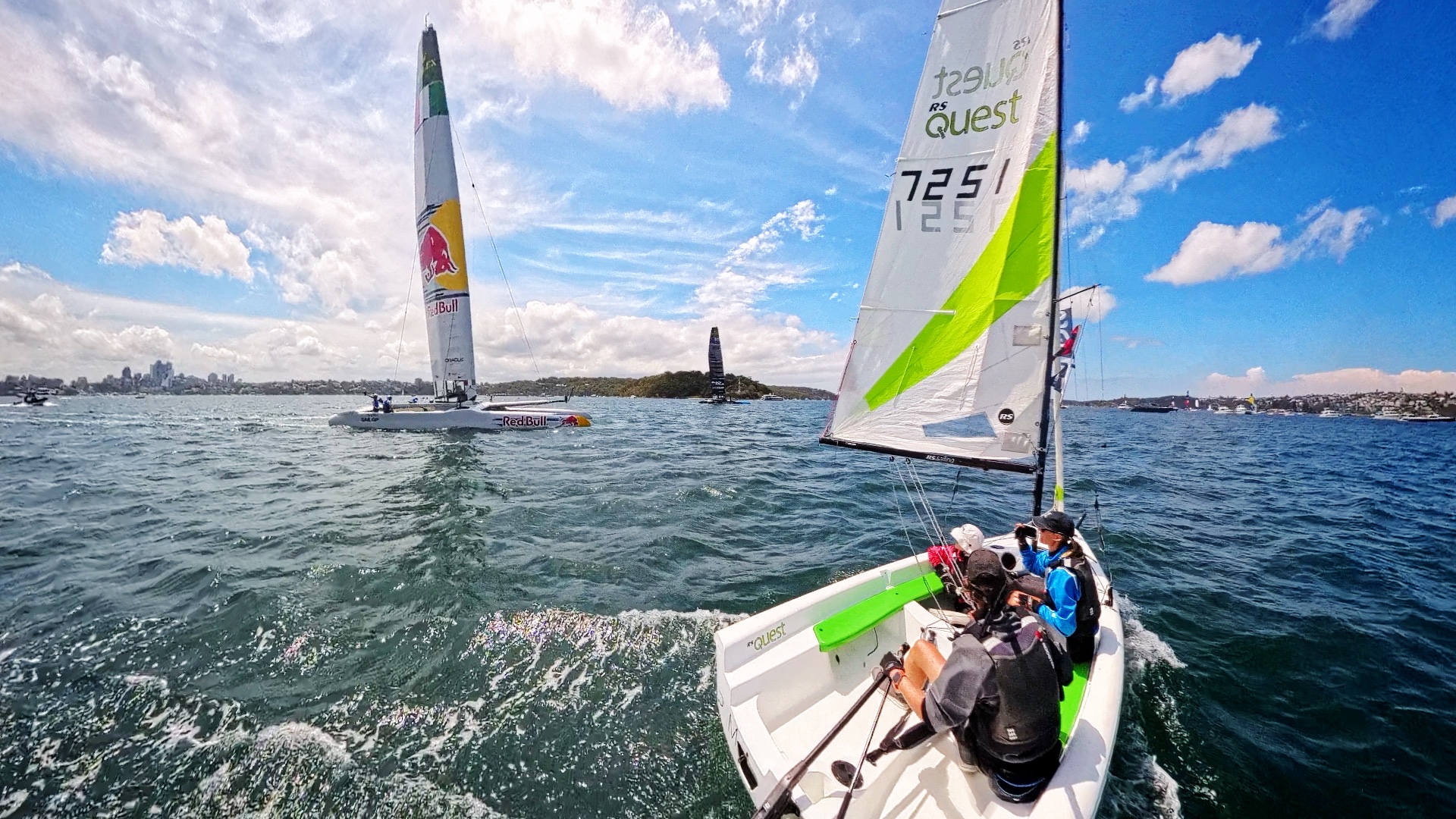
Here is a sentence that does not appear in any sensible sailing manual: "Bring your own boat to the SailGP."
And yet. SailGP — the global racing series featuring the fastest sail-powered boats on the planet, the F50 catamarans that hit speeds of over 50 knots — offers exactly that. A "Bring Your Own Boat" flag. Buy one, attend an online briefing, and you're invited to join the official spectator fleet on Sydney Harbour, anchored inside a restricted zone, watching the world's best sailors do things that physics should probably not allow, from a distance of approximately "close enough to feel the wake."
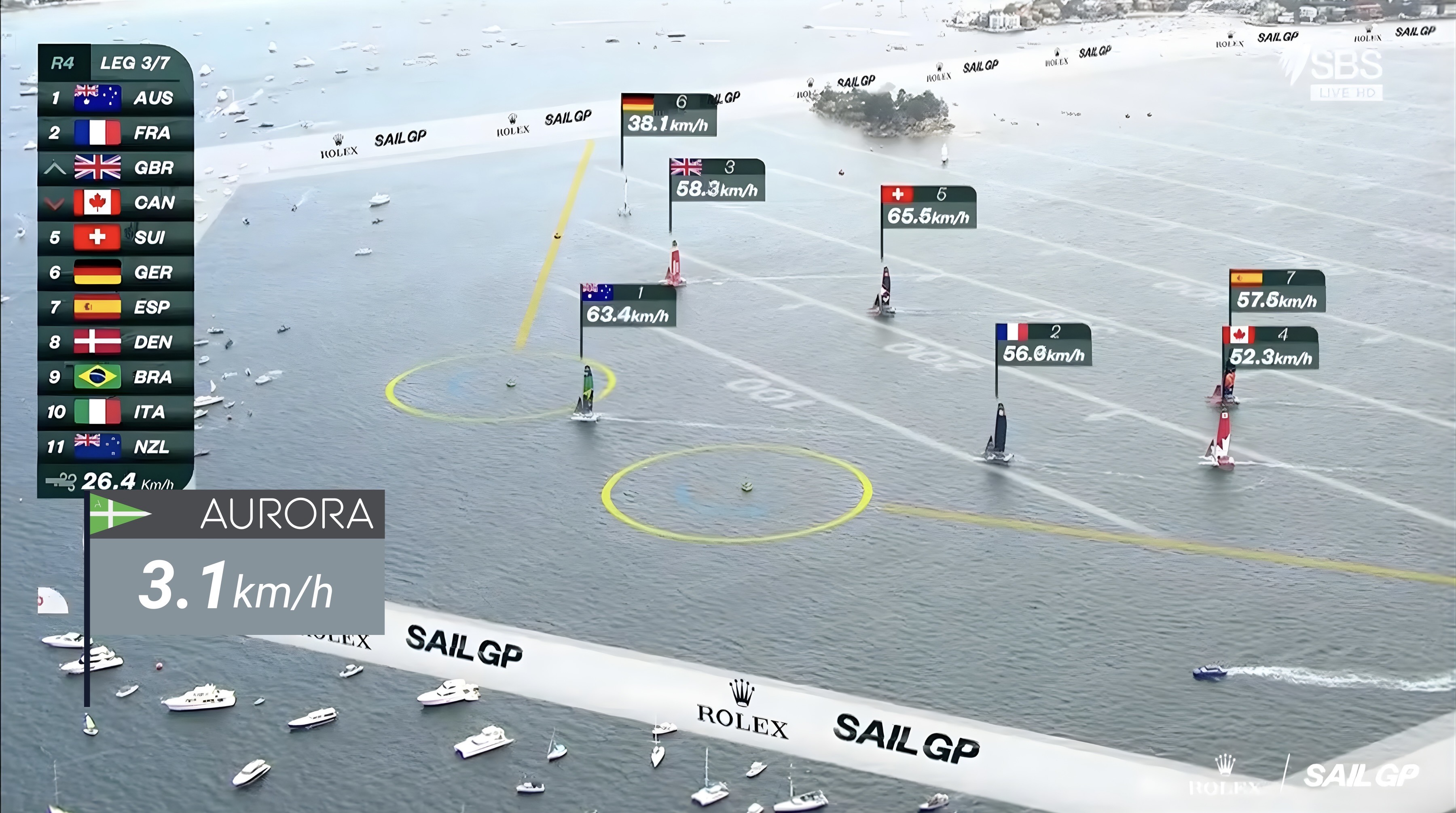
Aurora is not an F50 catamaran. Aurora is a just five-meter dinghy with lime green accents named after the southern lights. The logic of taking her to watch SailGP is therefore either inspired or completely unhinged, and Team Aurora (in this instance the Lichtfuss family) decided not to ask which.
Step 1: The Logistics
Getting a small yacht from Port Melbourne to Sydney Harbour and back involves, as it turns out, quite a lot of Googling. You need a boat ramp (Rose Bay: concrete, good condition, confirmed via photo reconnaissance). A berth for two nights (Cruising Yacht Club of Australia: found, booked, unexpectedly welcoming to berth our tiny vessel). A hotel connected to the Yacht Club by bus (solved). Free parking for a car with a trailer (also solved, eventual location classified).
You also need to attend a mandatory online briefing, at the end of which you receive a password, which unlocks a form, which gets you a flag in the mail, which gives you access to the restricted zone. This is the sailing equivalent of an escape room, except the prize is watching a boat doing 50 knots past your bow.
The briefing itself turned out to be genuinely fascinating. The technology behind SailGP extends well beyond the boats — the mark buoys on the course are remotely controlled and GPS-guided, capable of autonomously holding position or repositioning between races to reshape the course on the fly. There is an entire colour-coded ecosystem of support vessels: team ribs, superyacht tenders, VIP boats, safety and medical boats, media vessels, and course marshals — all coordinating a precision racing operation on one of the world's most complex working harbours. The Course Marshal who delivered the briefing did so with enough enthusiasm that the weekend was already looking good before Aurora had left the deck.
Step 2: The Test Sail
Friday. Rose Bay ramp. Aurora in the water for the first time on Port Jackson — and immediately into 20 knots of wind. Reef in. Speed up. Absolutely stunning sailing on one of the world's most famous harbours, with a bonus sighting of Team USA's F50 capsizing during practice. (They were subsequently unable to race that weekend. Poor form from the universe, honestly.)
Step 3: The Actual SailGP
Saturday delivered four races, 27 degrees, a northeasterly building through the afternoon. The spectator zone filled with an extraordinary mix — superyachts, VIP tenders, support ribs in team colours, safety boats, media boats, and scattered among them all, one tiny sailing boat - Aurora. The main learning of the day: no amount of sailing on Port Phillip Bay fully prepares you for the sheer volume and size of traffic on Sydney Harbour. The wash from a single passing superyacht was its own small adventure.
What no briefing document can quite convey is that the entry gate for the F50s to the race course runs directly through the spectator fleet. The catamarans came through at speed. Aurora held her position. This is the SailGP version of a front-row concert — you are not watching from the stands.
Chowder Bay was discovered entirely by accident during a break — a calm, sheltered anchorage tucked away from the action, ideal for a swim and a moment of quiet appreciation. It is now firmly on the favourites list. A thunderstorm warning arrived at the end of the afternoon and sent the fleet scattering back across the bay and Aurora sprinting back to CYCA. After seven hours on the water, the crew were not entirely sure they wanted to do it all again on Sunday.
But, Sunday morning, they were back at the marina at 7am, ready to go.
Sunday brought lighter winds, a southerly, three more races, and the F50s coming through the gate again — this time from a slightly better vantage point, with slightly more confidence about what to do when something that large is travelling that fast in your general direction.
Monday: pack up, slip the boat at Rose Bay, long drive home. Aurora is back on the deck in Port Melbourne just before sunset. 90% Logistics, 10% Sailing – immeasurable amount of fun. (Also similar to the SailGP as we learned).
Connecting People
Aurora's story has mostly lived at the other end of the sailing spectrum — small boats, beginner programs, Scout trips, kids who'd never been near the water before. That's where the health research lives, where the argument for sailing-as-wellbeing-intervention has been quietly building, where a teenager who capsized four times at GG Camp called it the best day of his life.
But it turns out the same pull exists at every level. A tiny family dinghy on Sydney Harbour, manoeuvring through the spectator zone while 50-foot foiling catamarans scream past, is still just people on the water — doing something that is difficult to fully explain to someone who hasn't tried it.
SailGP's Bring Your Own Boat program is, on reflection, one of the best ideas in modern sport. A direct, deliberate bridge between the elite and the everyday. A signal that this sport, from Tackers in Optis to world-class athletes in F50s, can belong to everyone on the water.