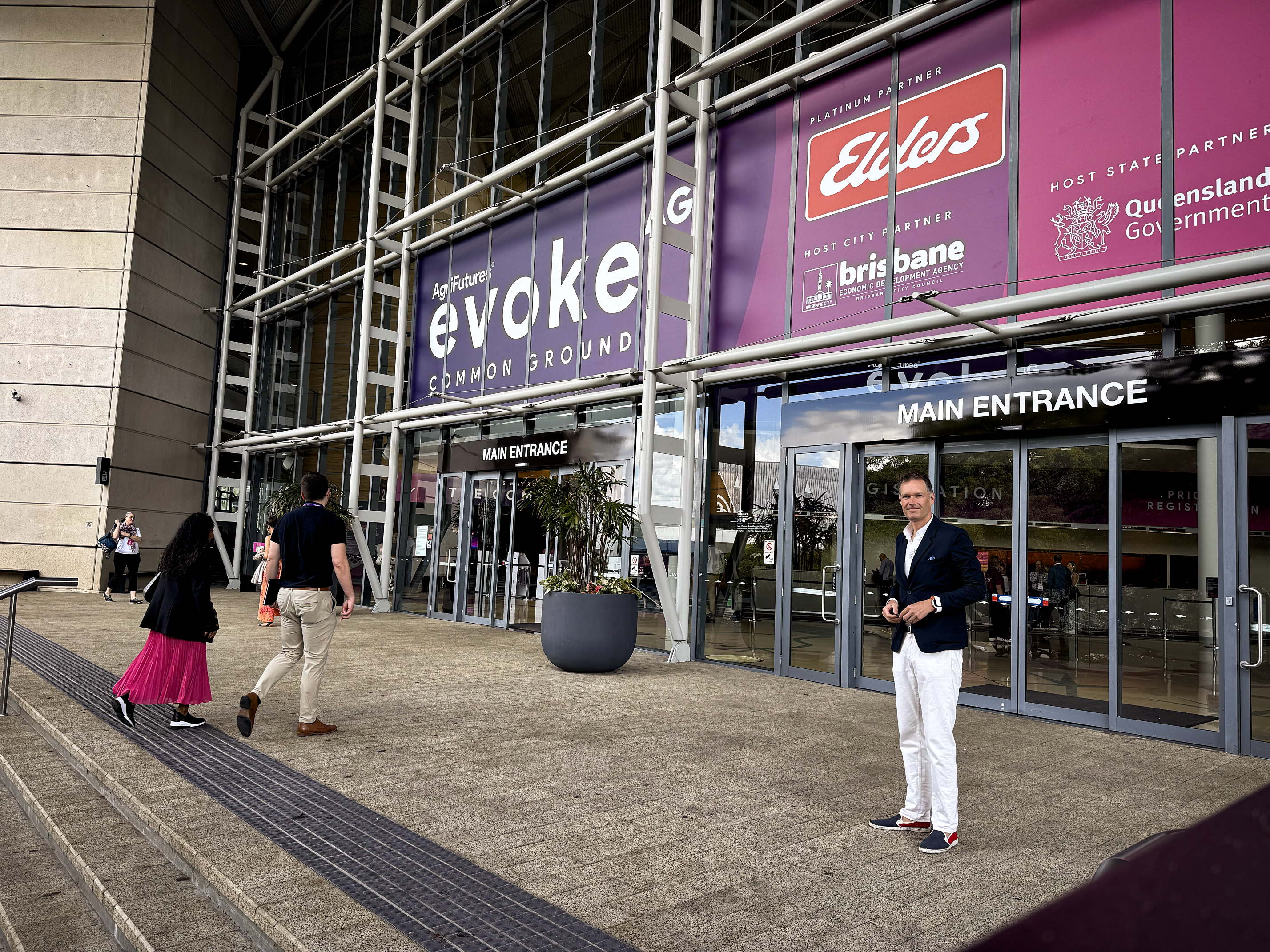
Evoke(n) – Part 2 - Farming Is (Getting Too) Hard, Mate (but still better than Aerospace?) - SHR!MP S02E04
30 November 2025
Language became even more direct, reflecting on “reckless” new regulations driven by urban environmentalists that are enacted without consultation or consideration for the people they actually affect, and an emerging urban/country divide that some likened to the early developments that led to a similar division in the US.
Many (if not all) were very concerned about climate change and any risks affecting trade and seemed to more in touch with reality and a lot more strategically thinking than many others.
And as growing crops is becoming increasingly harder (for environmental, economic and regulatory reasons), alternative land uses become increasingly attractive, even for enterprises that own the whole supply chain, as I learned from a large landowner (large, here means areas that they are bigger than some European countries), who also handles everything from the logistics around to the actual “farming”, processing and export of final products on a large scale. For them, the greatest value and their future value creation opportunity lay in the land alone, not in their (high-quality) animal and plant-derived products. For example, the idea of switching from producing food to either plastering the pastures over with solar panels or good old mining, both being low-risk and low-effort and regarded more highly in comparison, seems to become an appealing alternative business opportunity.
I also met a French aerospace engineer! Who, however, turned sheep farmer in Australia – taking care of thousands of animals. My rather curious question about why I can’t find good Australian wool products here hit a nerve, explaining that they had to export all raw wool (according to them, some of the finest in the world) to Italy, as Australia had no processing facilities that could turn their raw wool into yarn, and therefore, as with so many other exports, others would make the high-value products that only make it back to Australia as finished, expensive imports.