First Session on the Sea: one anchor, one capsize, nobody watching.
20 October 2026
The first Session on the Sea went out on Friday, with no one aboard but me. For Session on the Sea, that’s not a cancellation — it turns into a session to experiment. And this Friday, I tried to anchor, like no one has (possibly) ever tried before.
What I wanted to test: anchoring the dinghy single-handed from a heave-to, and getting underway again the same way. It is a manoeuvre I have not found in a book. The conditions were right for a first try — light air, plenty of room to leeward — so I sailed out past the Spirit, hove-to, and set to work, entirely alone and quietly relieved about it — I neither would have nor could have tried it with someone else on board.
This is more interesting than it sounds. A keelboat has the one thing that makes anchoring calm: mass. It carries enough momentum to run the whole textbook manoeuvre — up into the wind, under sail, single-handed, no drama. Often the anchor sits ready on the bow with an electric winch to drop it and haul it back, or a button by the cockpit: sail up, let her stop, press, anchor down, done. Reverse the process to leave. Or you skip the sailing entirely and do it on the engine.
A five-metre dinghy has none of that. The anchor lives in the foredeck locker, if the boat even has one, and there is no mass to speak of. Point her into the wind and you have perhaps a second and a half before she is pushed off and sailing again, whether you like it or not. In theory you could heave the anchor over in that second and a half and hope — but you do not sail around with it loose and ready, because the moment you capsize it auto-deploys: falls out, sinks, takes the rode with it. And retrieving it takes a great deal longer than a second and a half, during which you are hauling rope with both hands while the boat, nobody at the tiller, quietly sails away (in the best case).
My guess is that few dinghy sailors have ever seriously considered anchoring — why would you, mid-race — which, on a small boat, single-handed, is just enough of a juggling act that most people sensibly don’t. Which may be why I have not found it written down anywhere.
But adventure is the point, and we have anchored Aurora in some beautiful bays already — the land version: beach her, unload, walk her out into the shallows, set the anchor. And that has always meant a swim. If one day we want to stop for a swim on a warm afternoon, or just drift and talk, or even put a line over the side, being able to anchor without getting wet would come in handy. Not quite this time, evidently.
The first attempt worked, nearly. Line round the mast, made fast “inside”, anchor fed out and down and biting; the boat slowed to almost nothing. But not quite still: she was sailing on the anchor, the rode angling back off the side rather than leading cleanly from the bow, so instead of lying quiet she sat there fidgeting, half-held. To fix it I reached forward under the stays to take the rode to the bow with a bungee and clip — leaning, as I did, out over the side the line ran — which, it turned out, was one degree past what the boat was prepared to put up with. She did not protest. She simply, politely, lay down, waited for me to slide off the foredeck, and tipped me into the bay.
Fifteen degrees, the water, and a good deal earlier in the afternoon than I had planned to be in it — which, ideally, was not at all.
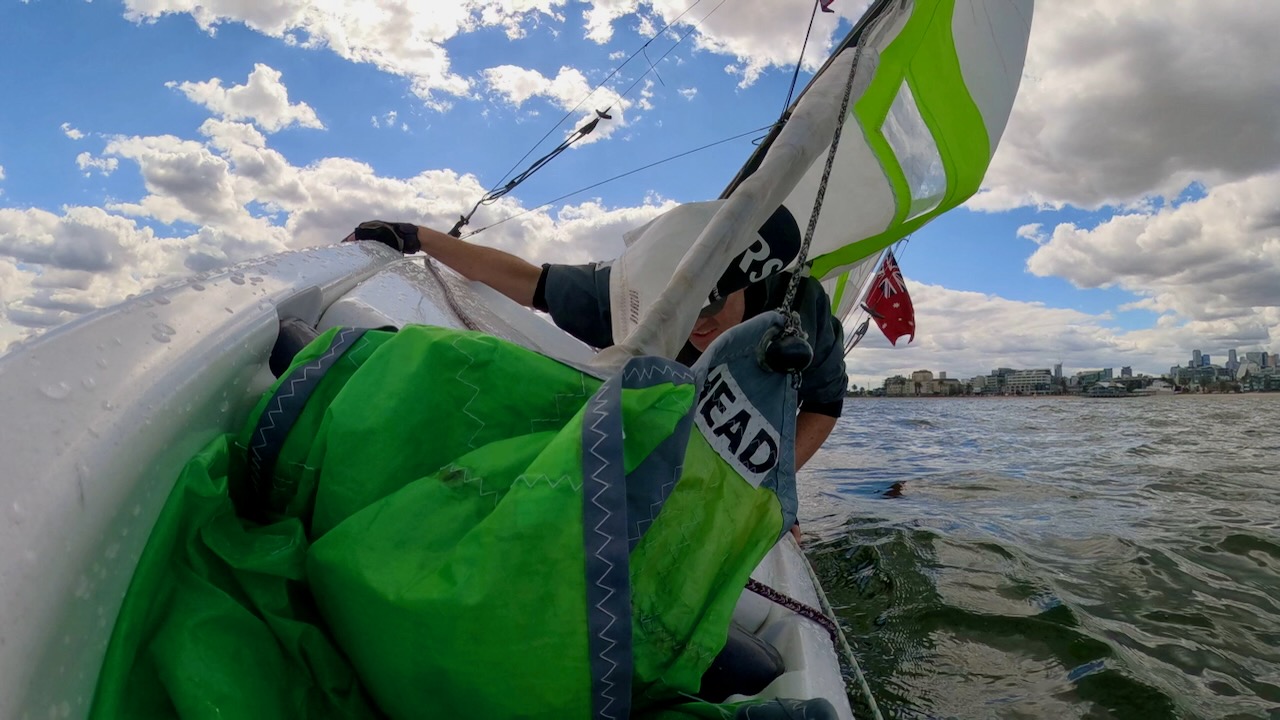
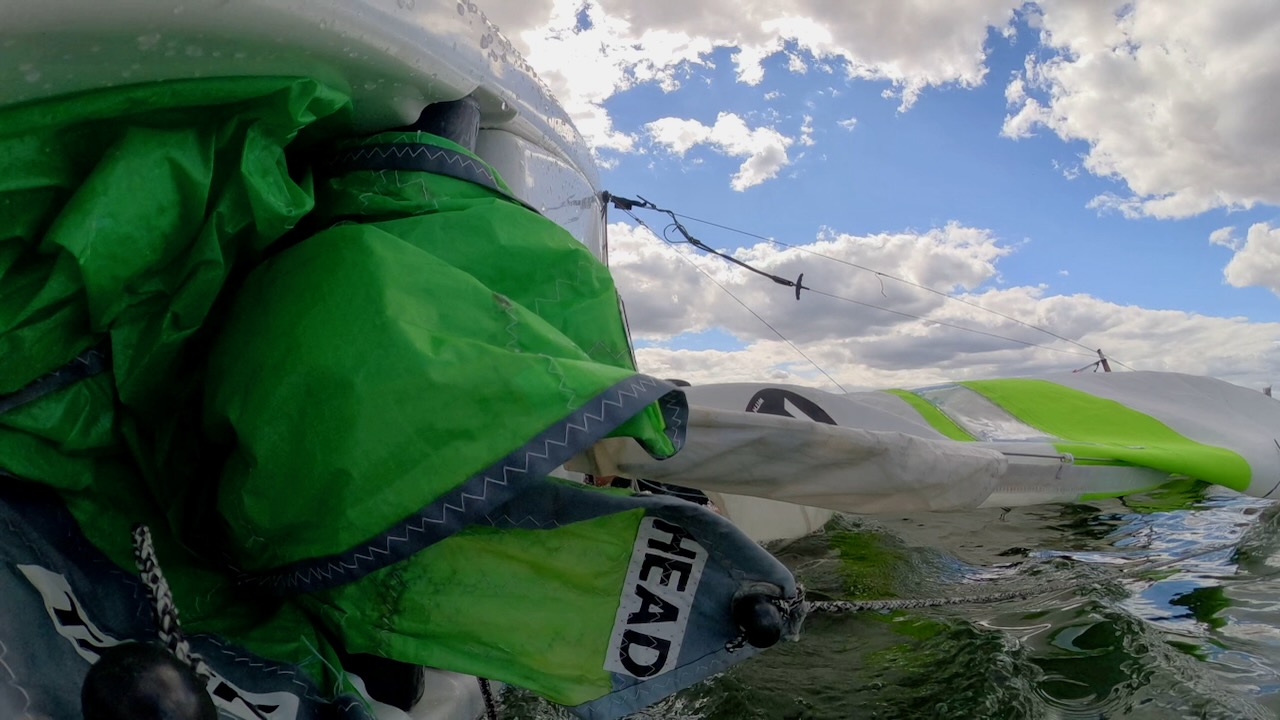
Righting a dinghy is the part that’s either feared (by many adults) or loved (by nearly all kids), but it’s (usually) nothing dramatic — free yourself, hang off the centreboard, wait for her to come back up — and she came up anchored, as it happened, in precisely the spot I had been trying to anchor her. The one part of the plan that went perfectly, I achieved by falling in. The lesson arrived while I sat dripping back on board, reconstructing my own downfall: the likely culprit was the rudder, still down. Still in the water, still steering, still gamely trying to sail a boat that was doing its best to stay put. I lifted it up, and the scene went quiet and true — the stable hold I had been after.
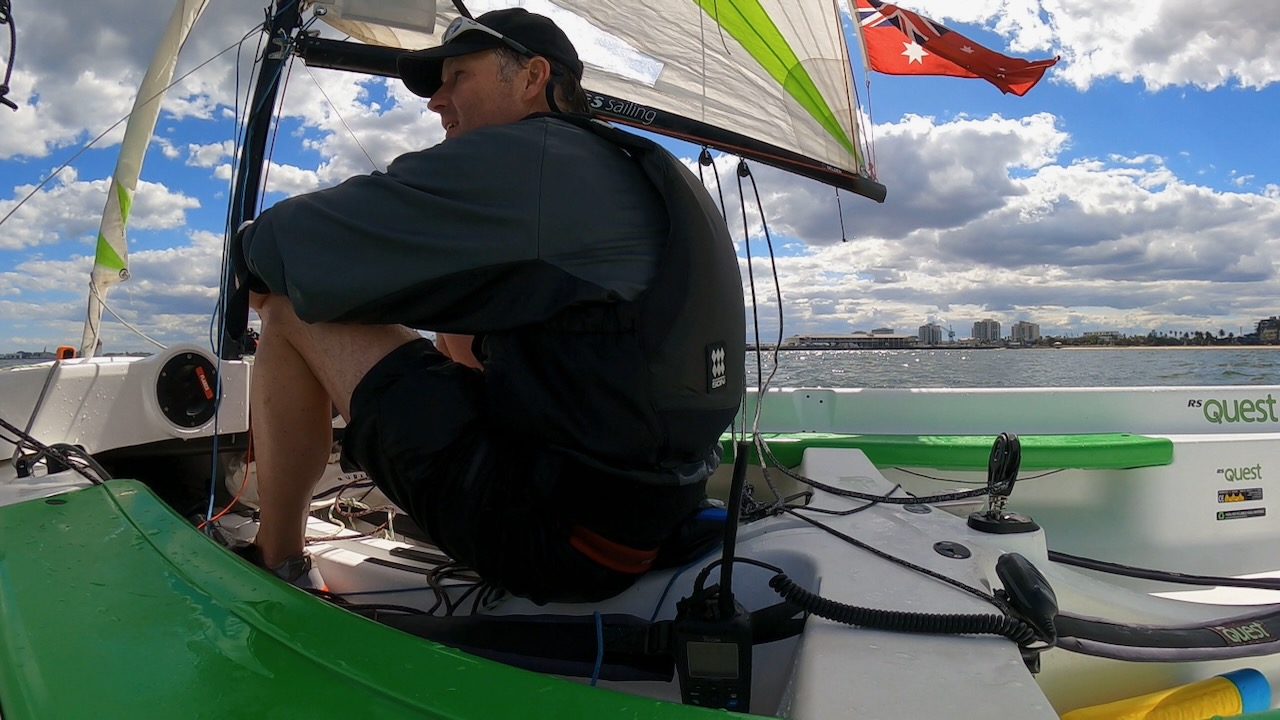
Weighing anchor, by contrast, was undramatic: jib out to feel the load, a hard haul to break it free, the boat falling back into her hove-to drift, everything stowed, sail made again. Then an hour of the low late-afternoon sail that is the reward for all of it — the light low on the water, the city going gold behind, the boat, now that I had stopped arguing with it, doing the simple thing beautifully.
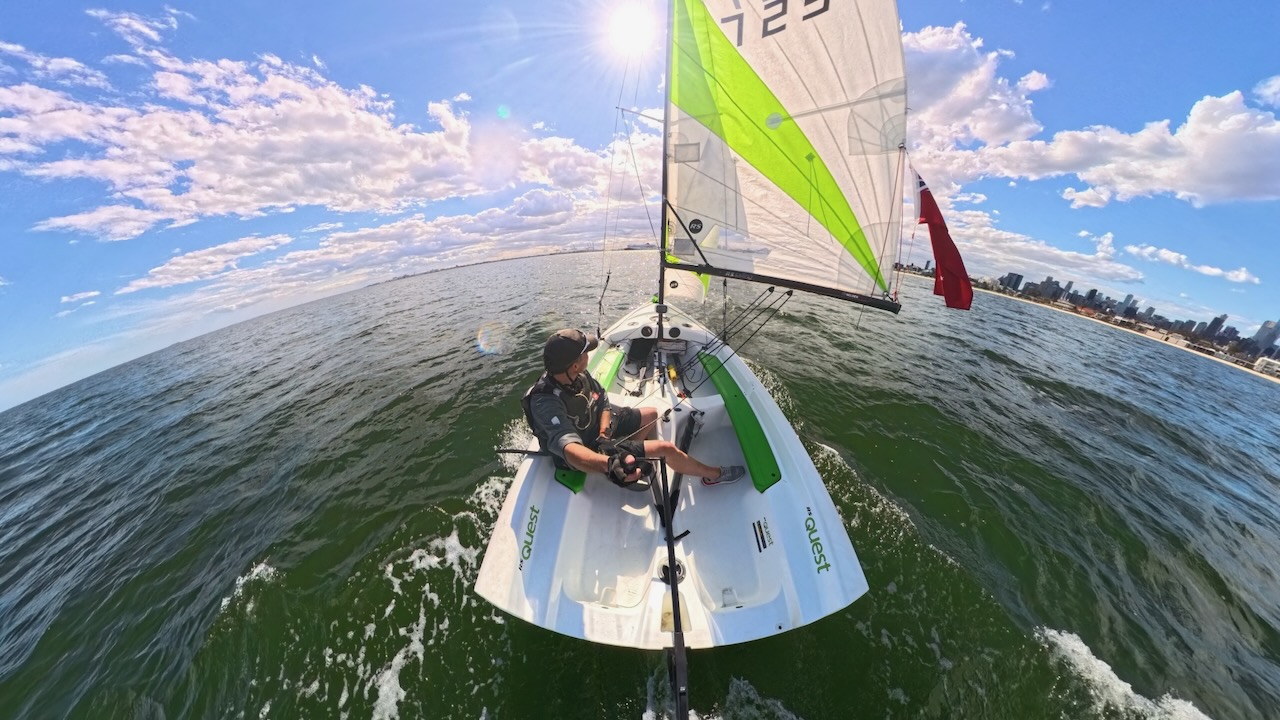
Session one, sailed. A manoeuvre I now know how to do — dry, next time, with luck — a reason I now understand it went wrong, a few ideas for improving it, and a damp but durable reminder that a rudder keeps steering for exactly as long as it is in the water.
Aurora goes out again next Friday — for deep thoughts or deep dives. Possibly both.
Session On the Sea runs Fridays from Port Melbourne Yacht Club through to mid-December.
How it started: Your last meeting of the week.