Packing the Quest for a multi-day expedition
24 January 2025
A multi-day trip means carrying everything. For Aurora’s crew that was a tent, sleeping gear, water and food, a full change of dry clothes for ashore, some basic office kit — notebook, charts, batteries — and all the usual boat and safety equipment. It’s a lot, even pared right back.
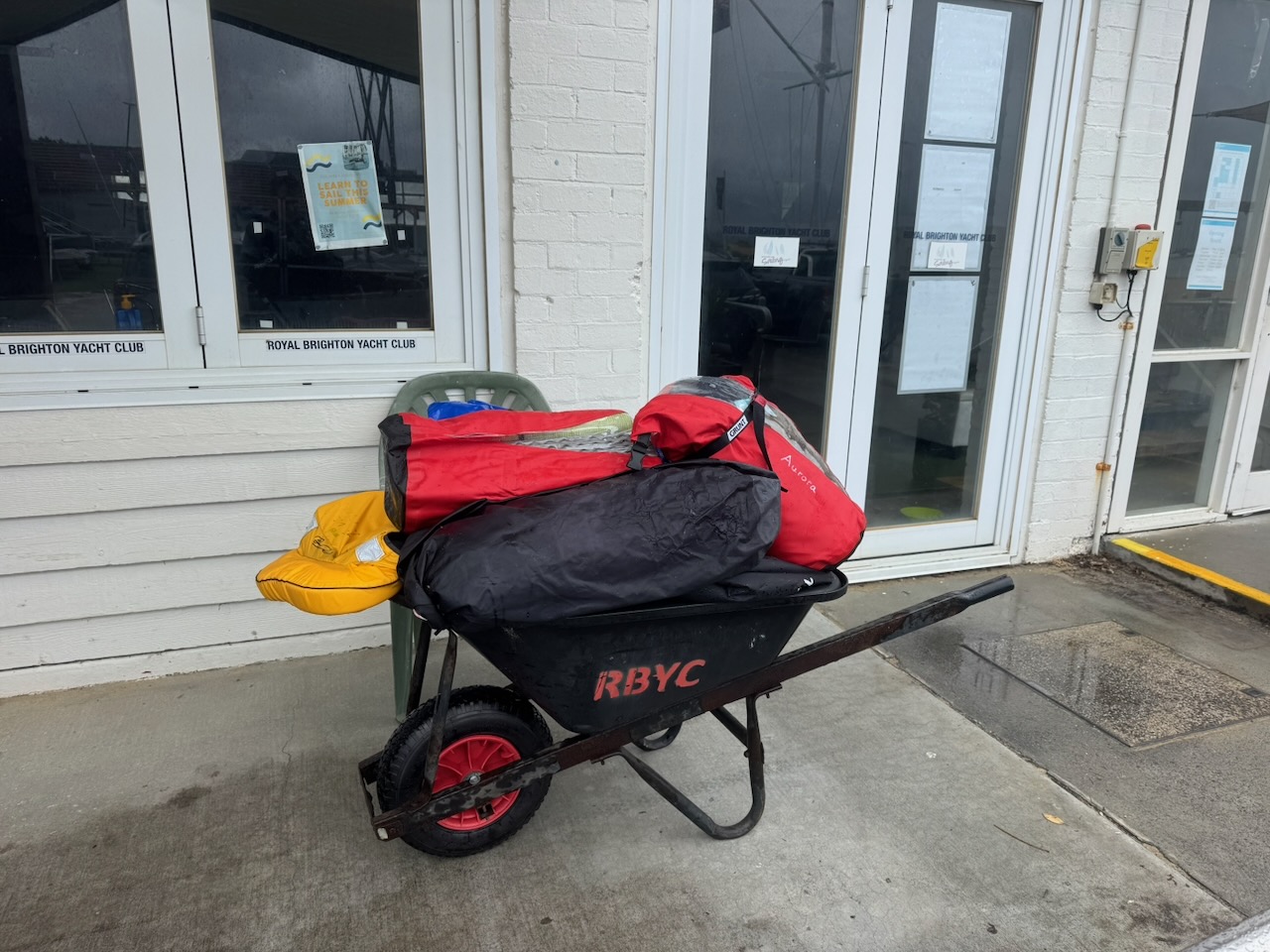
We tested a few ways to stow it across one trip.
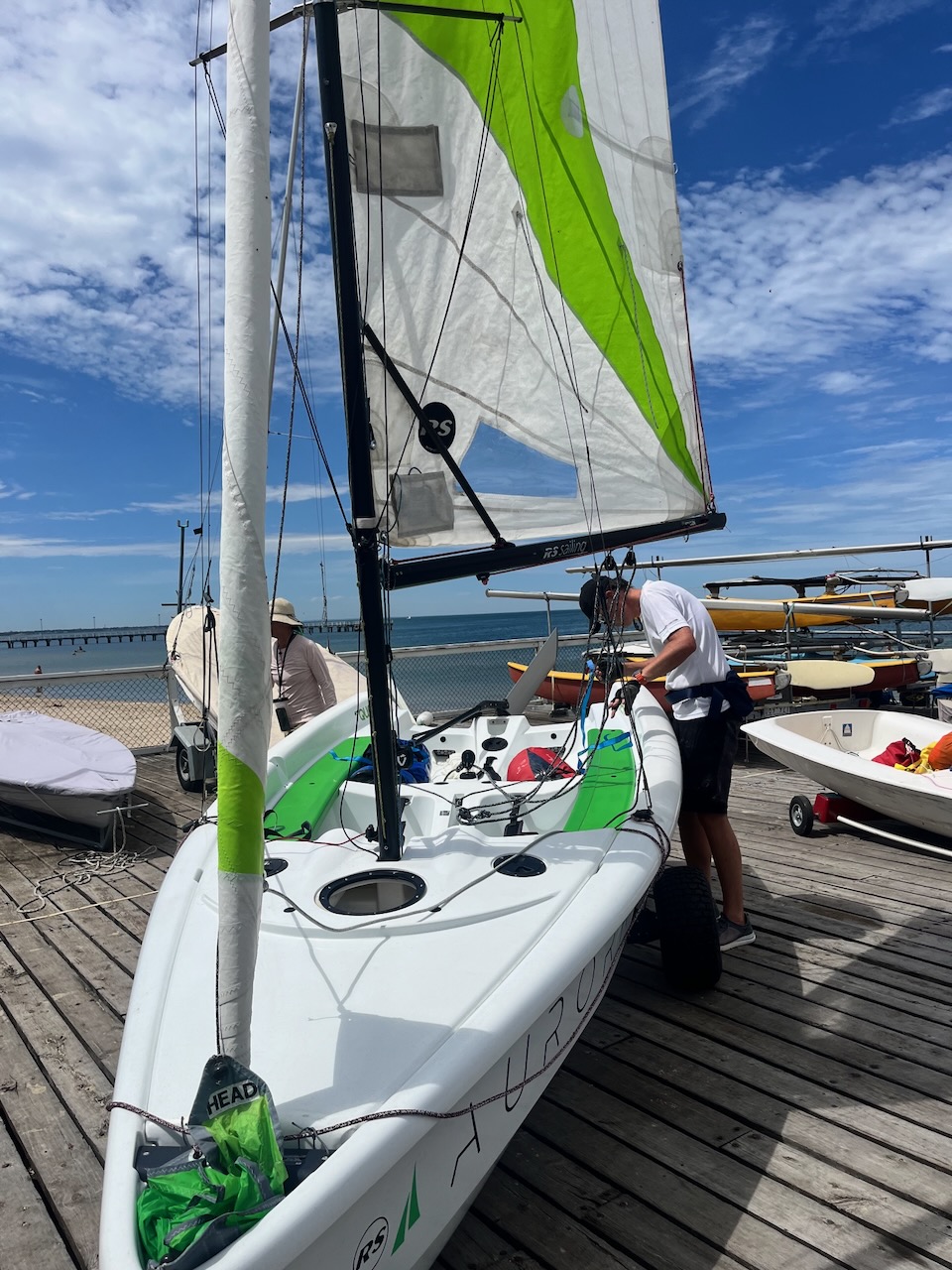
Foredeck — the clear win
- Main hatch — ropes, anchor, paddles, solar panels, tools and spares, with space to spare.
- Top hatches — spare shackles and bungees for the sail pack-up.
- Horizontal hatch, port — the safety gear: flares and smoke, lifejacket lights, emergency nav lights, a floating torch.
- Horizontal hatch, starboard — emergency snacks.
None of the compartments are watertight, so anything that had to stay dry went into a dry bag — the $2–5 Bunnings ones. The orange 5L fits the horizontal hatches perfectly: flares and smoke, or lunch and snacks, with nothing to spare.
Under the seats
The seats are hollow, with cut-outs — good for securing gear, once you work out how.
The first attempt was paracord, run inside the seats around the screw fittings on both sides, to clip gear in with carabiners. Too fiddly, and not strong enough. We left the paracord in anyway: it’s a tidy way to dummy-cord radios and water bottles on a day sail.
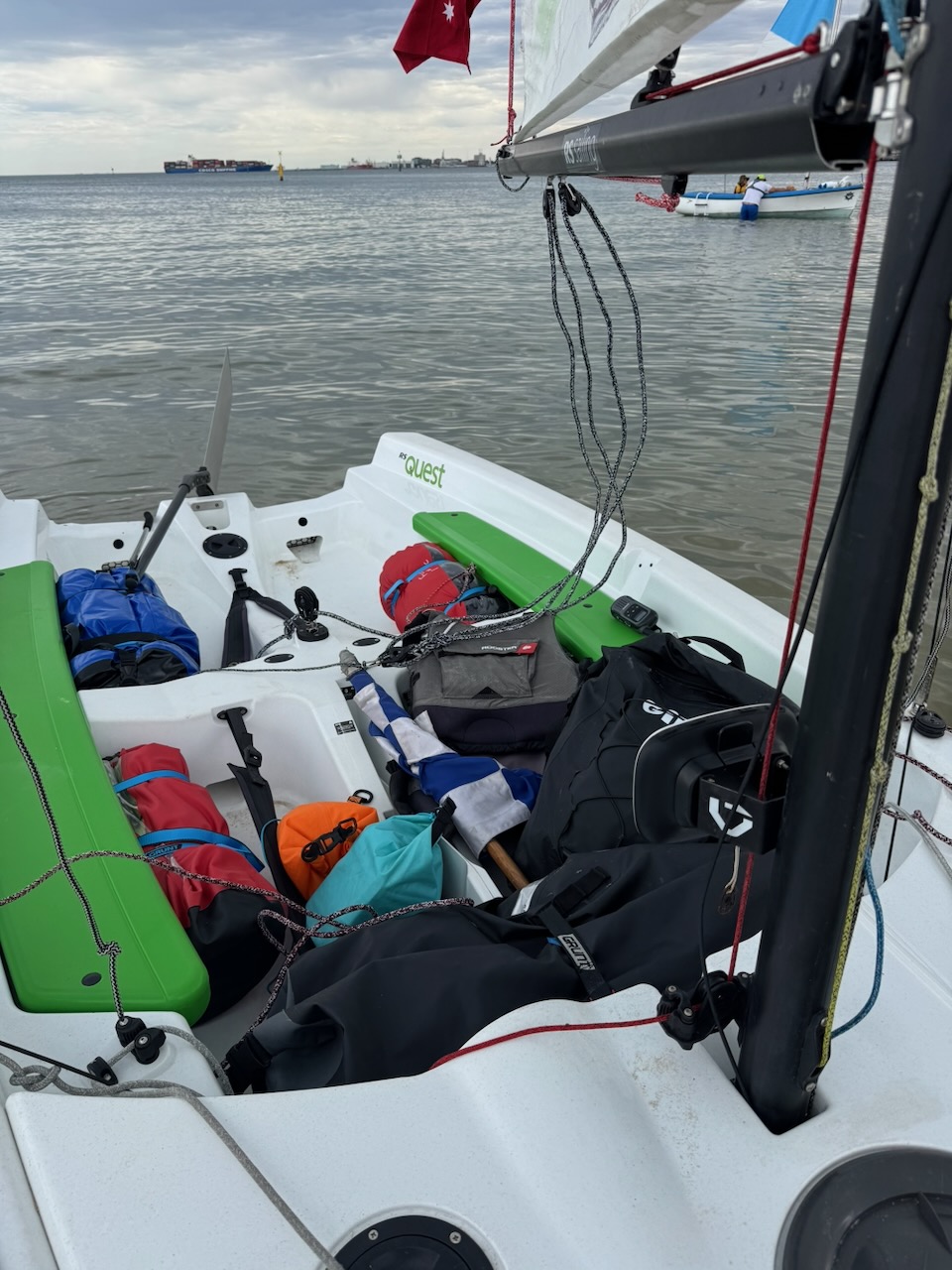
The second worked. We looped 3–4m Grunt tie-down straps (2m+1m, or 2m+2m) through both openings in all four seating areas, giving a front and a back loop in each — perfect for strapping in a round dry bag. Four bags, one under each seat.
They were too fat to sit flush, so at first we thought they would foul the footwell. They didn’t: no blocking the footstraps, and no trouble in strong conditions, when the footstraps earn their keep. In light wind they turned out to be the most comfortable thing on the boat to lean against.
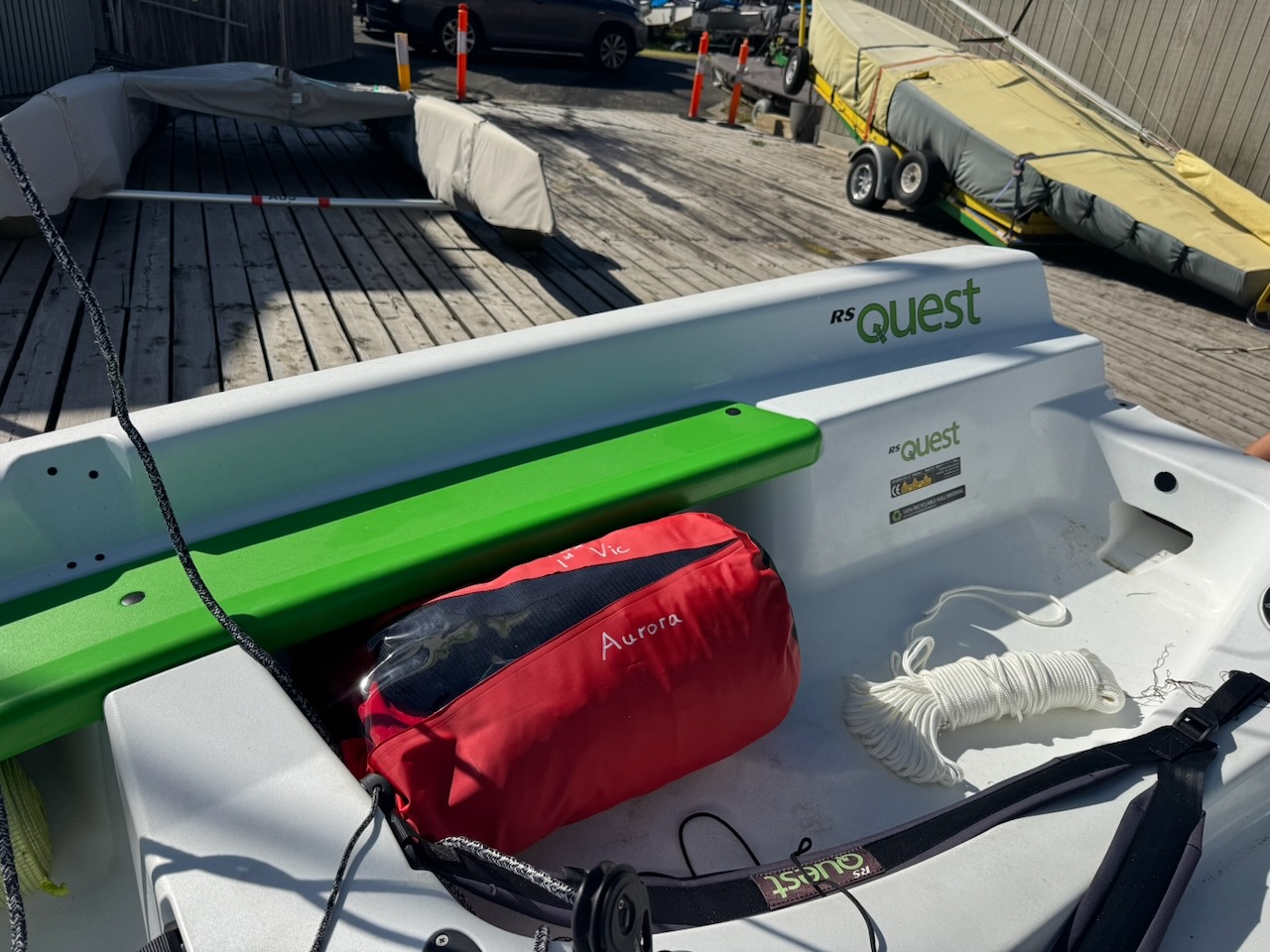
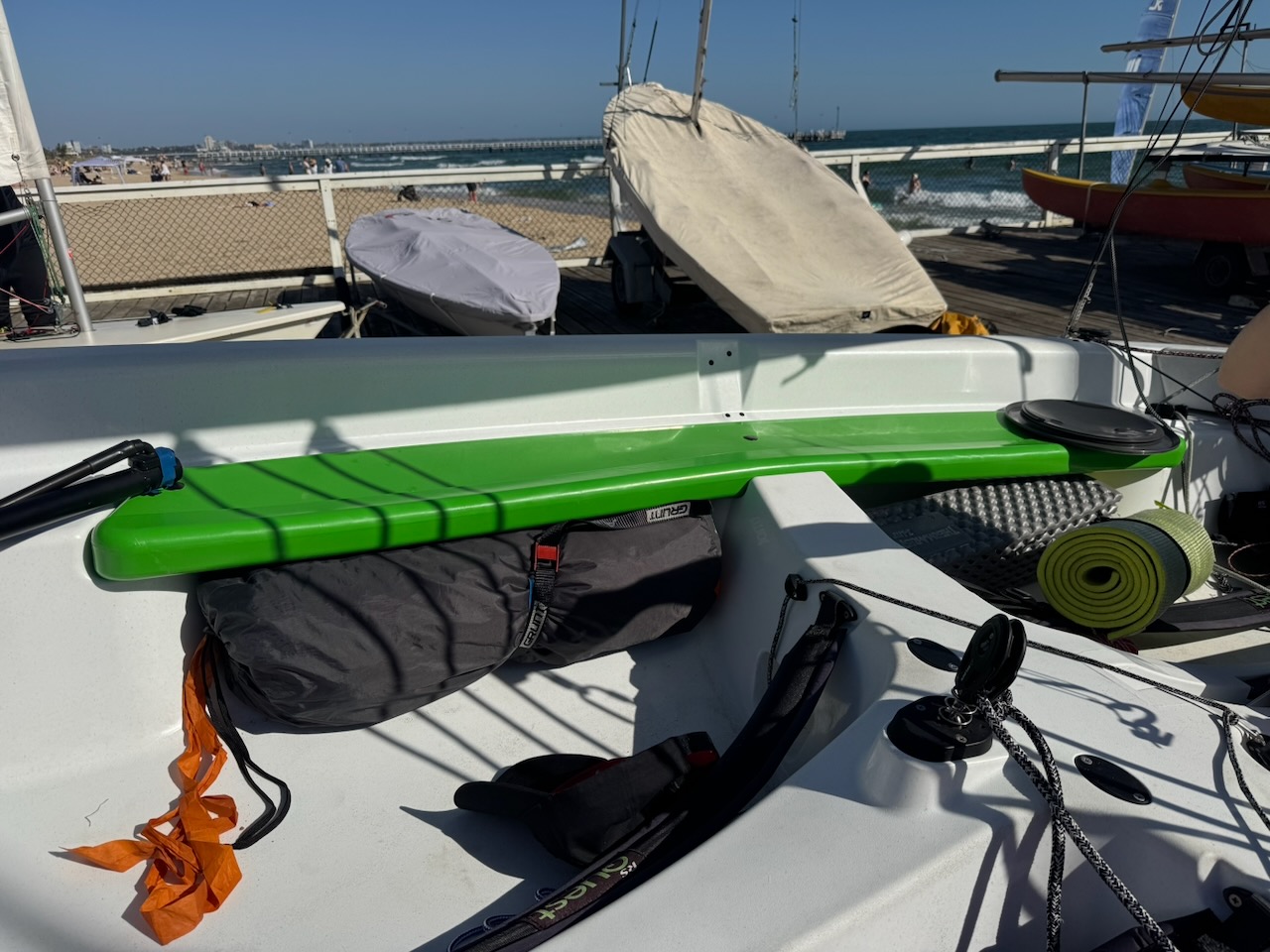
Behind the mast, across the beam — mind the centreboard
A 90L Gill Race duffel fits the space just behind the mast exactly. We held it with a 1m Grunt strap each side, to the footstrap attachment points (under the spinnaker sock, to port).
It lies over the centreboard, which becomes a problem if you pack it full. Pack both ends and leave the middle empty — smaller dry bags inside help — and the bag lifts clear when the centreboard goes up or down. Worked without a hitch.
This became the main on-water access bag, so anything that had to stay dry got its own dry bag inside: the older design, without the centre strap, isn’t waterproof to start with.
One more bag
On top of the 90L, a 35L Gill backpack, strapped to the mast with a 1m Grunt tie-down. Up there it stays out of the way when the 90L has to be lifted for the centreboard.
Experimental: a bag on the foredeck — unresolved
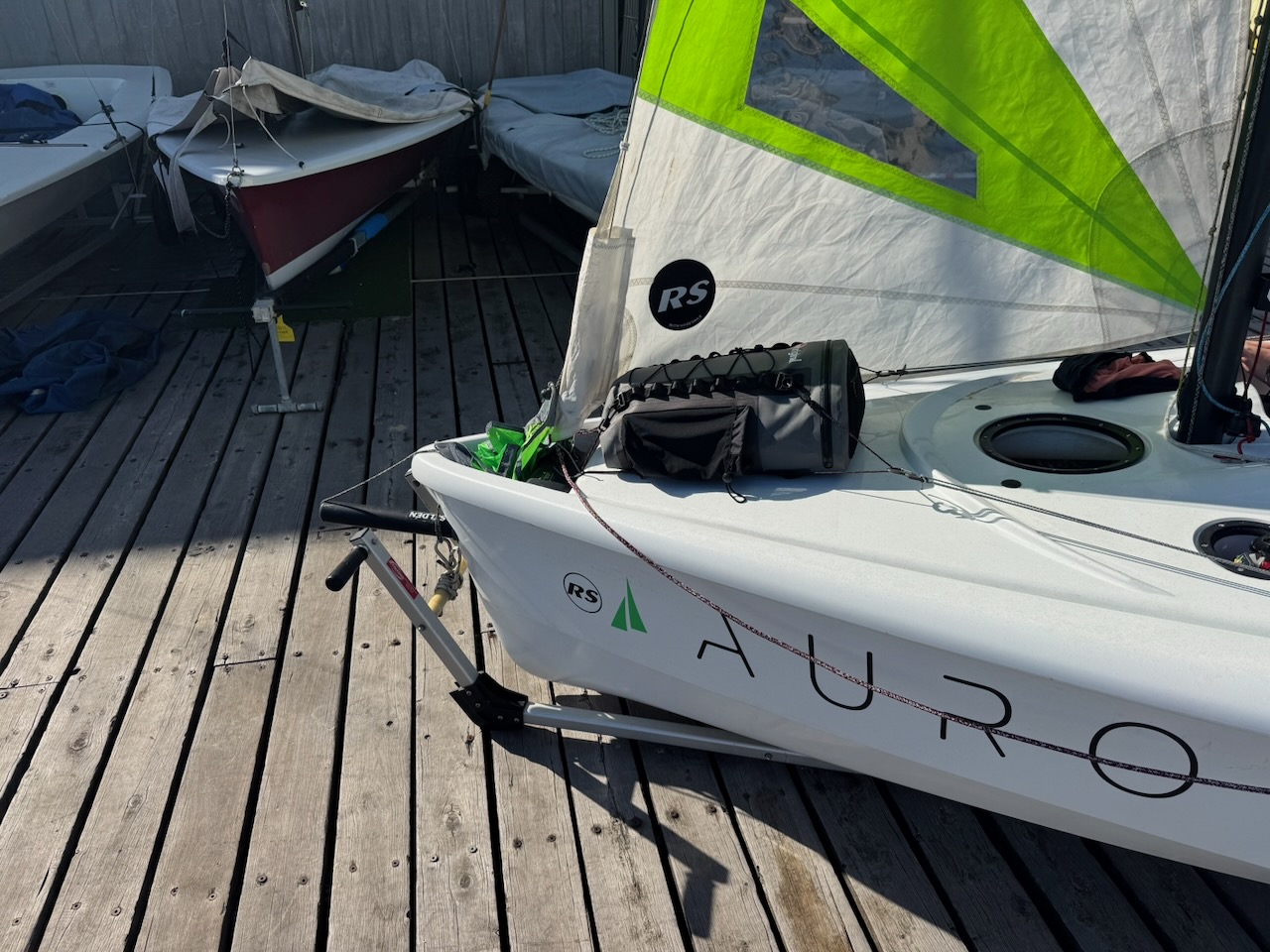
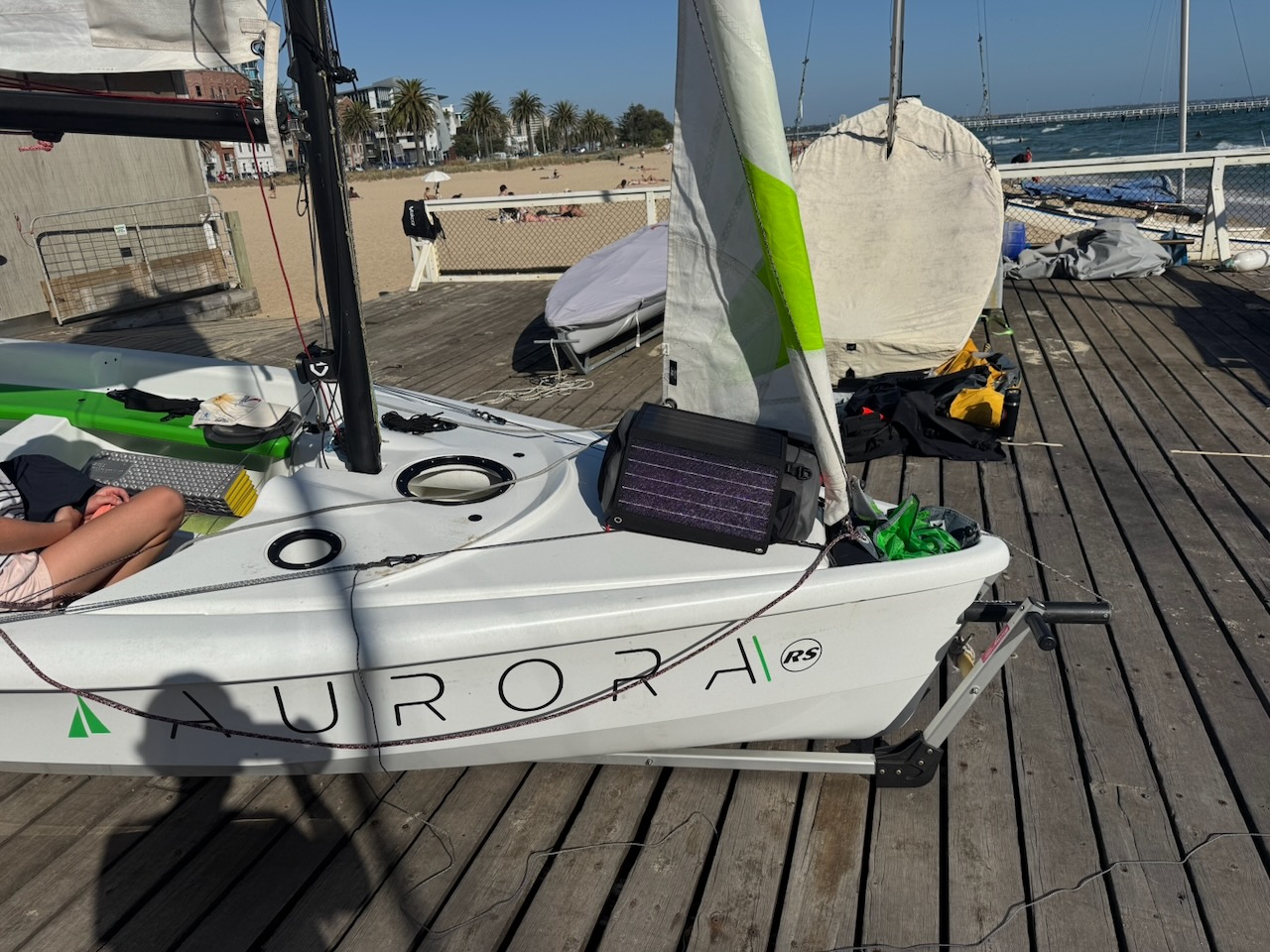
We ran out of trip before working this one out. The idea was an SUP storage bag mounted on the foredeck: easy-access gear, and maybe somewhere to mount and charge batteries off the solar panel. Three questions stopped us.
- Securing it. How to fix it to the deck properly — it may need attachment points fitted into the foredeck.
- The jib. Does the bag foul it? It might cost some sail performance, though the jib looks like it would still pass over the deck on a tack or gybe.
- Waves. Would the fix hold up to water coming over the foredeck? We didn’t think to ask at first. We learned later that you should.
Crew day bags
With three or four crew, the three or four personal day bags — water, food, sunscreen — were the least sorted part of the setup. We tied them to the loops on the 90L bag and stuffed them behind it under the foredeck, or clipped them to the footstraps aft.
Better, next time: lunch and sunscreen in one shared bag (the 90L), water and snacks on the crew, in a hip or belt bag. Hydration bladders worked well, and can be worn over the PFD.
What we’d carry forward
That setup got all our gear aboard — self-sufficient for a longer trip. The first time, working out which bag went where, and how to strap it, took a while. By the end, loading was about ten minutes.
The one test we planned and never ran was a capsize with the boat fully loaded. We’re not worried about the bags: everything was waterproof and strapped down well. The extra weight made Aurora stable — even in rough conditions. Whether it also makes her harder to right after a capsize, we don’t yet know.