Science4Life is closing. Years ago it helped start a company everyone said was dead on arrival.
01 September 2026
The German Life Science Startup Programme Science4Life is winding down. After more than twenty-five years, the sponsor’s backing ended yesterday, and the team steps away. It ran Germany’s leading business plan competition for the life sciences, and by its own count it helped more than fifteen hundred companies to the point of existing at all. It’s been a key part of my biotech life, so I want to mark its closing by saying how good it was.
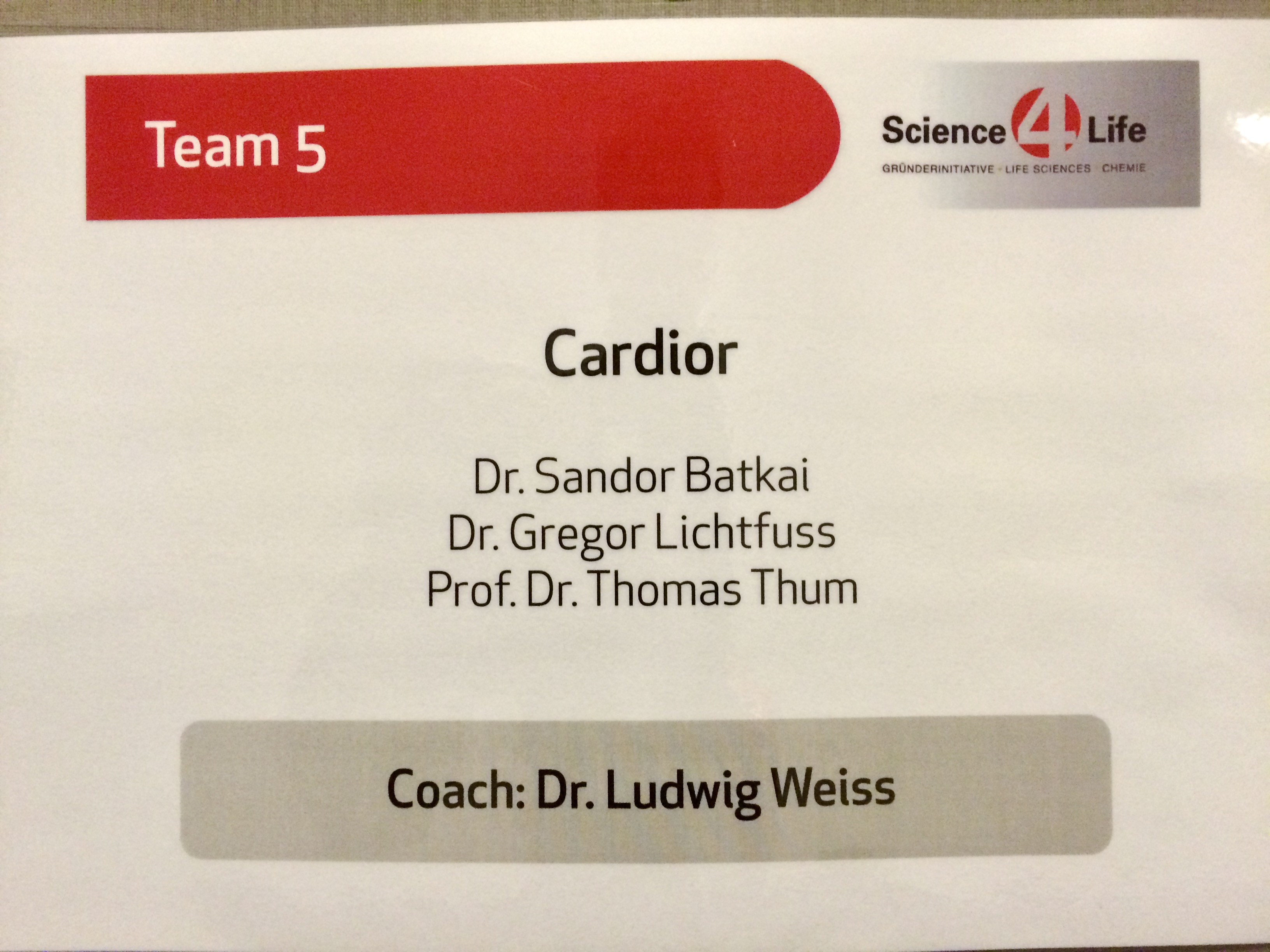
In 2014 and 2015, I wrote a business plan for a company that did not yet exist. It was called Project:Cardior Pharmaceuticals, and its purpose was to develop a single drug for heart failure — a disease that contributes to one death in ten in the western world, and against which, then as now, there was no treatment that halted or reversed the damage. Our plan asked for 23 million euros to take the idea to a first proof in man.
The plan entered the Science4Life competition. That was the ignition. A business plan is only paper until someone with standing reads it and takes it seriously. For a first-time venture with no company, no financing and a lead compound still called by its prototype name, Science4Life was one of very few places in Germany at the time that provided one - and it gave us hard deadlines to work towards.
I should be plain about what was mine and what was not, because both matter. The science was not mine. Cardior was founded on the work of Thomas Thum and Sandor Batkai at the Hannover Medical School — years of research into the role of a specific microRNA in the failing heart, published in the journals that matter, protected by patents. My part was the company around the science. I was seconded by Ascenion, the technology-transfer house, to write the plan, to pitch it, and to lay the groundwork for spinning it out - after all, I was working at the “Spinnovator” — to turn a validated piece of biology into something an investor could stop saying No to. I carried that for about a year, until Claudia Ulbrich took it on as chief executive and turned a plan into a real pharmaceutical company. What followed was years of work by many people, almost none of it mine.
But the plan and the work to pull it together were mine, and I pitched it, and I remember the thousands of hours - and the reception we got.
Not everyone agreed Project: Cardior was a good idea. In fact, over the early period I was told, continuously, that it would not work; that heart failure was a dead investment area; that RNA therapy did not work; that there was no exit; that I had no team and no experience; that I was, and I quote a particular “expert” directly, “the wrong person for the job”. It was not just individuals that sent clear signals - the day before we were to meet to discuss the first term sheet, one of the world’s largest pharma companies told its own team and the world that Cardiovascular Disease is commercially “dead”. Our strongest partner up in smoke, our strongest external supporters fired. This list was long.
The business plan made a prediction, in writing, in early 2015: that the company would develop its compound to a first clinical proof and then exit by sale to a larger pharmaceutical partner. In 2024, Cardior was acquired by Novo Nordisk. Science4Life’s own records now list it, without much ceremony, among the companies it once helped — a former participant, since sold for about a billion euros. The compound that I called CDR-132L for the 2015 plan is still called CDR132L and, at the time of writing, continues to make its way toward the clinic, even if it’s not an entirely smooth ride. They had called the whole field dead — the disease, the modality, all of it. It turned out only to be waiting. The science and Ascenion held the paddles; Science4Life pressed the button; and the heart started again.
I have left almost everything out of this account. A business plan is a confidential document, and most of what was in that one — the science, the numbers, the strategy — is not mine to publish. And today it is also “obvious” to anyone looking back. What I can say is the shape of it: a real problem, a real piece of science, a real team and a plan that argued they belonged together, written before there was any evidence the world would agree.
There is a coda that belongs here, given the occasion. From 2015 to 2019 I also sat on the other side of the table, reviewing business plans for the competition — reading other people’s the way mine was read. It is a particular education, judging others the way you were once judged. It teaches you a lot - including humility. Little of the confident tone of a business plan or pitch - nor of their “expert” review - tells you how much of the potential underneath is true. Only the founder may know, and only time will tell.
Science4Life gave a first hearing to an idea that a lot of serious experts were sure was wrong. Over the course of its life it must have given a hearing to many such “wrong” ideas — including those that turned out right. That would be one measure that would be worth reviewing, that generally no one measures: the number of “bad ideas” that turned out to be right - not because they won a competition or a startup programme, but because they took part, got taken serious enough to be listened to when common sentiment was that they shouldn’t.
With thanks to Christiane Wohlers, who ran Science4Life in those years, and to everyone who gave their time to the programme.