Two Fridays on the Bay
30 October 2026
An account of the heave-to anchoring experiments · RS Quest “Aurora” · Port Phillip, October 2026
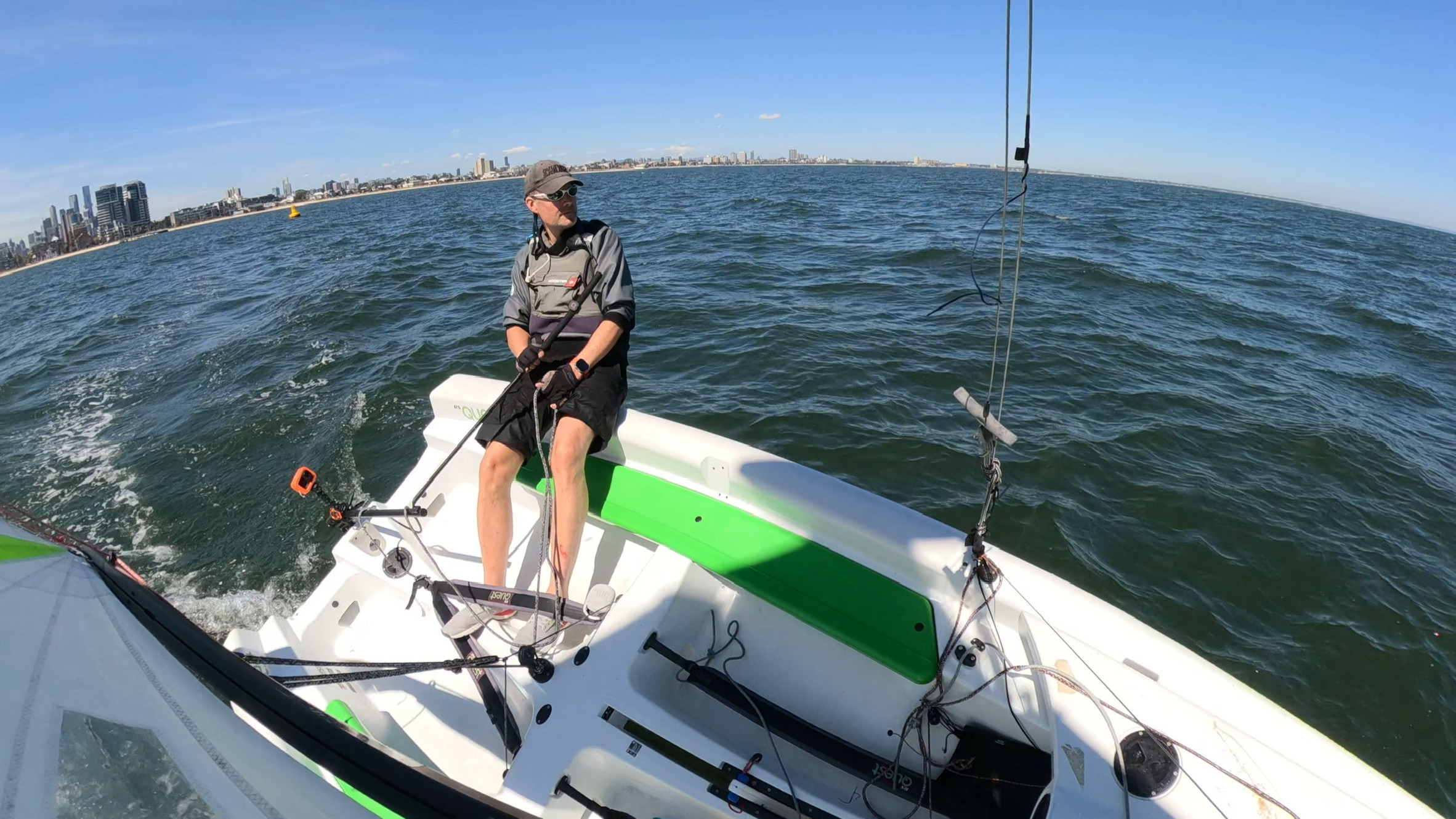
The sixteenth gave me a steady southerly, ten knots, the kind of sea breeze that makes Port Phillip look briefly like somewhere you would pay to sail. I reached out, backed the jib, tucked the tiller extension into the drain at the stern, and the boat did what the books say a hove-to boat does: she stopped arguing. She lay across the wind and slid to leeward at a walking pace, quietly, waiting. I went forward to ready the anchor.
What the books leave out is how long it takes one man to clear an anchor rode he has not cleared enough times, and how completely the clearing of it occupies the part of the mind that is meant to be watching the boat. I was paying out the rode, pleased with myself, when Aurora put her mast in the water.
A capsize to port is a brisk education. There is the moment of disbelief, then the cold, then the ordinary business of standing on the centreboard and hauling her upright, which a Sea Scout does in under a minute and which I did in rather more. The anchor, for its part, had gone down and — I would learn that evening, from the track — held her within a few metres while I sorted myself out. The experiment, in other words, survived its author.
Righted, and rather quieter in my opinions, I let her lie. And she lay. The GPS, read at the kitchen table that night, told the story I had half-felt on the water: hove-to she had drifted at about a knot, a tenth of the wind; anchored, she had swung on her rode and gone nowhere worth the name. The manoeuvre worked. That I had capsized in the middle of proving it felt about right.
I went back a fortnight later to do it properly.
The forecast promised a northerly for the whole day, with the confidence forecasts keep for being wrong, and a brisk southerly met me on the deck. I spent the first while fussing with cameras — a stick-on mount that had already stuck itself off after two weeks, a suction cup I declined to trust on the grounds that it was a lost GoPro biding its time — and settled for one clamped to the tiller and one on the GNAV.
The breeze had gone soft and shifty by the time I reached the G, as if it too had read the forecast and was hedging. From the G I worked across towards St Kilda and set up the heave-to again. This time I took far too long with the lines — the rope-handling is the bottleneck of the whole business, and the bottleneck is me — but the manoeuvre itself went to plan: anchor down, rudder and centreboard up, jib rolled away, and the boat sitting to her anchor with nothing left to do but watch.
Watch I did, with the low disquiet of a man unsure his anchor is holding. The G seemed, once or twice, to be coming closer; then it seemed not to be. The track settled it afterwards, and in my favour: she had wandered seventy metres of path but come back each time, swinging on the rode rather than dragging, and the small net creep she did make ran across the wind, not down it — the tide’s signature, not a dragging anchor’s. Still, leading the rode over the side rather than the bow let the hull take the breeze beam-on and sail her about more than she needed to. Next time, from the bow.
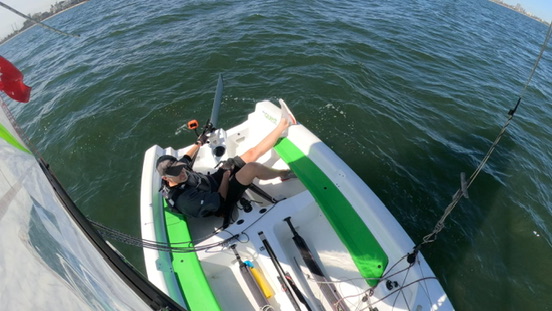
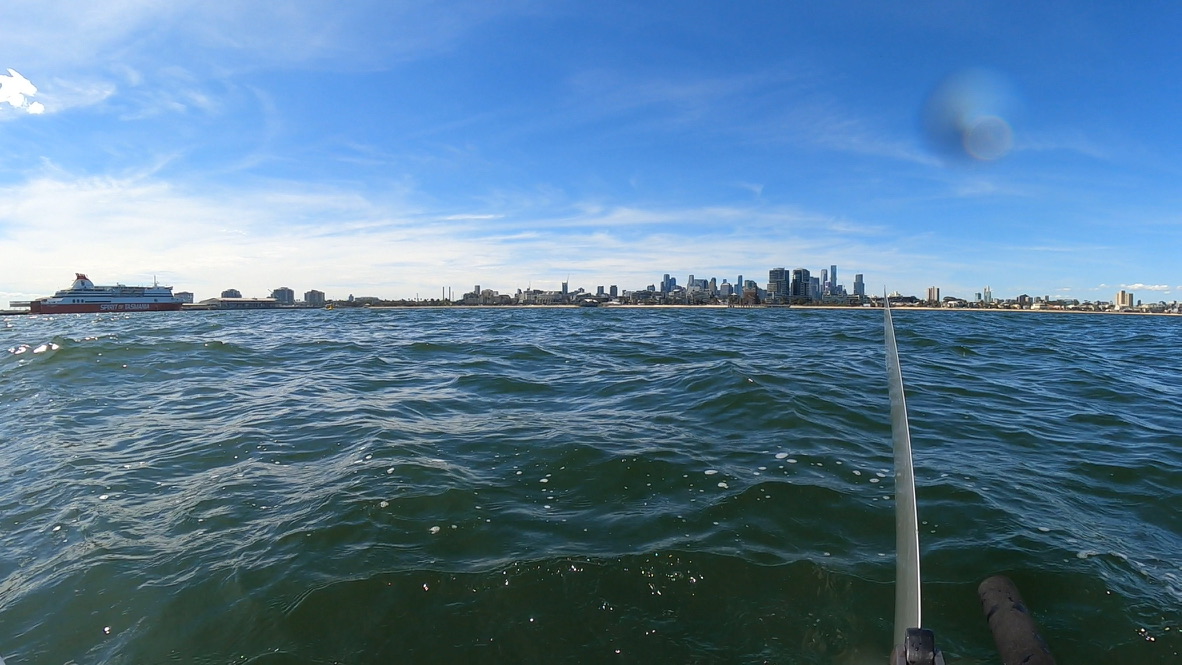
Getting under way again was the same in reverse, and smooth — board and rudder down, jib out, anchor broken out and gathered in, and off. I had a mind to carry on to St Kilda for the afternoon, but the wind chose that moment to fall away, and rather than paddle home in disgrace I turned back. Closer in it kicked up again, shifty and contrary; the northerly the forecast had promised was arriving at last, leaning on the dying sea breeze, and by the time the boat was packed away it had won, and blew properly out of the north as if it had been there all day.

It was a good day’s work and a slightly lonely one. The manoeuvre is a Session on the Sea by design — three on a boat, the point being the company — and I had sailed it as one, testing anchors, talking to no one, tired in the particular way solo days are tiring. I would have liked someone aboard to watch the anchoring work, maybe with a drink and snack in hand. But work it did, twice now, which is two more times than a theory is usually allowed before it has to become a technique.
There is a version of this with more weather in it — the light going gold on the water, the mast’s shadow long across it, all of that. The plainer version is the truer one, and I think the better: a man, a small boat, an anchor, and a Friday; a theory borne out; and a wind that lied about its intentions all day and then, at dusk, with nobody left afloat to care, finally told the truth.
Session On the Sea runs Fridays from Port Melbourne Yacht Club through to mid-December.
How it started: Your last meeting of the week.