Six students, one prawn and a CSIRO programme
12 November 2026
In August, six Master of Biotechnology students stood in a basement in Clayton, among tanks of zebrafish and axolotls, for the first time trying to explain their work on prawns to the scientists who are the experts in keeping aquatic animals alive. None of the students had planned on prawns when the year began. I am sure some regretted their choic… assignments.
They spent 2026 on SHRMP.bio, our two-person (plus six students) venture working out how to grow giant freshwater prawns on land. Two teams, a full academic year, and a test the classroom rarely sets: would anyone use their work? Their evidence went into SHRMP.bio’s application to CSIRO’s Innovate to Grow: Aquaculture programme. It was accepted. The programme finished this month, and so did the students, clearing SHRMP.bio as one last hurdle before graduation.
Team A asked whether a small pilot could exist at all. One student modelled the heating eight ways: a heat pump and some insulation run five to seven times cheaper than an element in a bare tank. Victoria’s licensing path came back as a conditional yes. Another built a method for patent searches, so the next person can start where this student finished. The third took part of their work to Melbourne’s fishmongers and restaurants. They also checked a database of land-based shrimp farms company by company, correcting their own first count when it proved wrong. Of the 16 that survived, no company they looked at farms this prawn, and none is in Australia. That work is now its own chapter in our history series: Would Melbourne eat it?
Team B looked further out, towards 2050. One student designed a feeding experiment around a cost most trials ignore: the more protein a prawn eats, the more nitrogen waste ends up in the water, and a closed tank cannot flush it away the way a pond can. Another planned how a new way of breeding prawns could be tested step by step, with a point after each step where a funder could stop, and a ranked list of the best labs in the world to do it. The third took on water sensors, which slowly drift off true: how do you correct one when it is the only thing measuring the water?
And in the first sprint, one student emailed a crustacean-reproduction scientist in Queensland, unprompted. Weeks later, CSIRO’s programme matched SHRMP.bio with its R&D coach: the same scientist, with whom we have since enjoyed multiple exchanges of scientific ideas.
We finished the CSIRO programme this month. Six students’ fingerprints are on it, too.
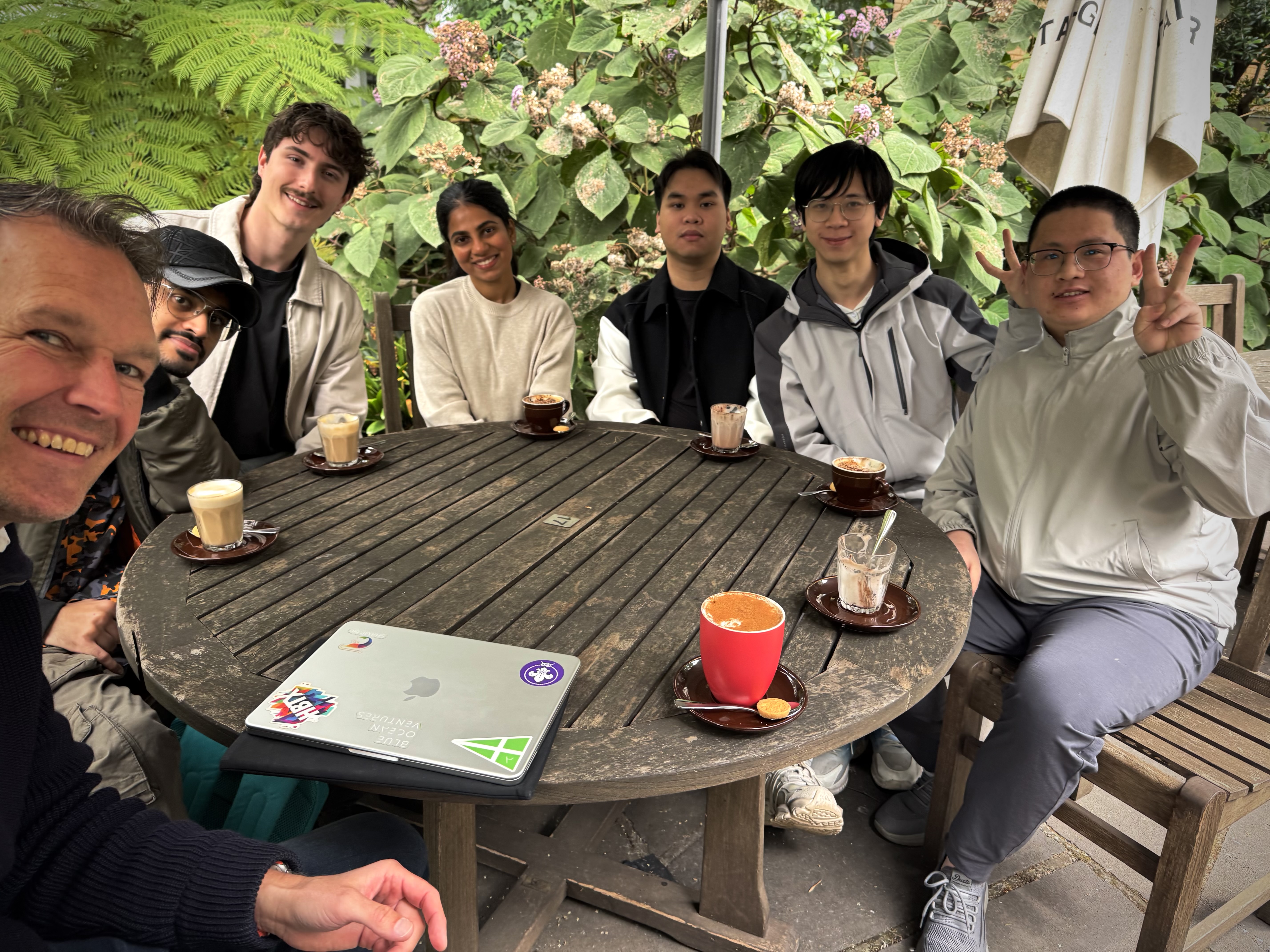
Well done & Congratulations